The Challenger Force
A Skunkworks Approach to Military Innovation

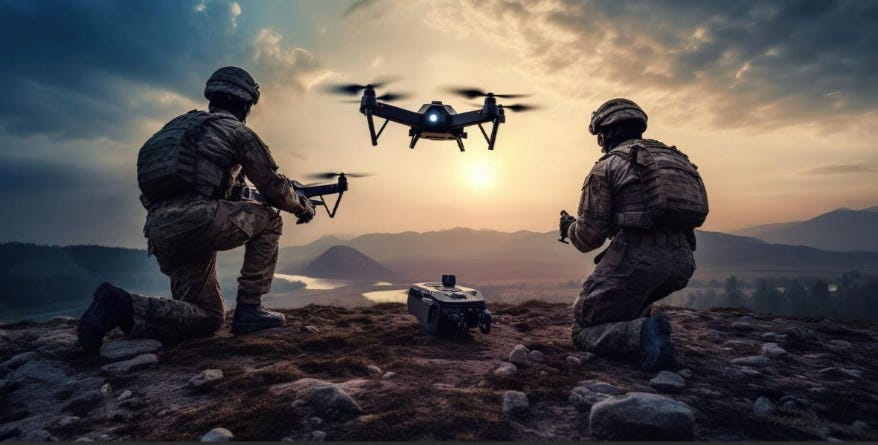
The Problem
The U.S. military procurement system is broken. The F-35 program cost over $1.7 trillion. The Zumwalt-class destroyer program spent billions on ships that don’t work as intended. The Littoral Combat Ship was supposed to be affordable and versatile; it became expensive and limited. These aren’t isolated failures - they’re symptoms of a systemic problem.
The current procurement process takes 10-15 years from concept to fielding. By the time systems arrive, they’re often obsolete. Requirements balloon as every stakeholder adds features. Risk-averse committees choose established contractors over innovative newcomers. And there’s no feedback loop.
Peacetime means no real test of whether expensive new systems actually deliver combat advantage.
Meanwhile, potential adversaries are innovating rapidly. Ukraine has demonstrated that cheap drones can defeat expensive tanks. China is fielding hypersonic missiles and massed autonomous systems. America’s military is strong; the question is whether our procurement system can adapt fast enough to maintain that strength.
The Proposal: Challenger Force
Create a permanent “Challenger Force”—a joint military organization comprising roughly 2-3% of each service, with a radical mission: use alternative equipment, tactics, and procurement approaches to test and demonstrate innovations against standard military approaches in realistic exercises.
Think of it as the military’s skunkworks, but with operational teeth. Not just a research lab, but combat-capable units that compete, demonstrate performance, and drive change through empirical results.
Structure - Joint Force Composition
Army: One experimental battalion task force plus supporting elements (~3,000 personnel)
Air Force: One composite squadron (mix of fighters, cargo, tankers) plus autonomous aviation flight (~500 personnel, 24-36 aircraft)
Navy: One destroyer, one submarine, plus unmanned vessel detachment (~1,500 personnel)
Marines: One reinforced battalion with aviation element (~1,200 personnel)
Unified joint command structure (similar to SOCOM) and streamlined procurement authority across services. Total force size: approximately 6,000-7,000 personnel across all services.
Mission Hierarchy
Primary mission (all forces): Defend the country
Peacetime mission (Challenger): Test alternative approaches and demonstrate innovations through competitive exercises
Wartime: Challenger units integrate under unified command, with proven innovations rapidly transferred to Main Force
Procurement Authority
Challenger receives dedicated R&D and procurement funding ($3-5 billion annually) with authority to:
Bypass normal procurement timelines for prototype and demonstration systems
Trial equipment from any vendor, including non-traditional contractors
Field test systems within 12-18 months of concept approval
Share detailed performance data through classified channels and selective public reporting
How It Works
Quarterly Evaluation Exercises
Challenger Force conducts exercises against Main Force units in realistic combat scenarios. These test specific capabilities and tactical approaches rather than attempting comprehensive force-on-force engagements.
Independent evaluators (mix of civilian technical experts, retired senior officers, and academic researchers) measure:
Mission accomplishment rates
Cost-effectiveness metrics
Simulated casualty ratios
Logistics efficiency
Time to decision/action
Equipment reliability and maintainability
Crew training requirements
Results are classified but shared with senior DoD leadership and relevant Congressional committees. Select aggregate findings (stripped of technical details) are published to create accountability without compromising operational security.
Technology Trials
For each major capability area (infantry weapons, communications systems, counter-drone systems, etc.), Challenger trials 2-3 alternatives to Main Force solutions over 6-12 months under realistic conditions.
Performance data feeds directly into acquisition decisions. Main Force procurement can reject recommendations but must document reasoning. Over time, consistent performance patterns become clear to decision-makers.
Innovation Access Program
Small companies and non-traditional contractors can pitch directly to Challenger acquisition office with 90-day decision timelines. Successful prototypes get fielded for operational testing by Challenger units. Proven concepts create pathways for Main Force adoption.
This expands the defense industrial base beyond traditional primes and accelerates the innovation cycle.
Rotation System
Units and personnel serve 18-24 month tours with Challenger, then return to Main Force, spreading successful innovations and lessons learned. This prevents permanent rival identities from forming while ensuring knowledge transfer throughout the force.
Officers who champion successful innovations and demonstrate adaptability receive preference for key assignments and promotion boards. This creates career incentives for calculated risk-taking rather than procedural compliance.
The Benefits
1. Fixes Procurement Through Competition
Current system incentives:
Process compliance over results
Contractor relationships over performance
Risk avoidance over innovation
Committee consensus over decisive action
Challenger system incentives:
Demonstrated performance matters most
Speed matters because capability gaps are real
Cost-effectiveness matters because budgets are finite
Empirical testing beats theoretical specifications
When Challenger equipment consistently demonstrates superior performance at significantly lower cost in classified evaluations, that creates undeniable pressure for adoption. Data-driven decision-making replaces PowerPoint promises.
2. Rapid Feedback Loop
Instead of waiting decades to discover whether a system works in combat, you get quarterly empirical data. Bad ideas die quickly. Good ideas propagate based on performance, not politics.
Procurement officers see within months whether their decisions lead to capability advantages or shortfalls. Career progression depends increasingly on results rather than on satisfying bureaucratic processes.
3. Real-World Testing Against Thinking Opponents
Current procurement relies on specifications, simulations, and contractor test ranges. Challenger provides operational testing: does this actually work when someone is actively trying to defeat it?
Complex trade-offs become testable: Should you invest in expensive platforms or numerous cheap systems? Which approach delivers better results in realistic scenarios? Empirical data provides answers.
4. Market Access for Innovation
Small companies and startups currently struggle to break into defense contracting. Challenger gives them a path: pitch directly, get rapid decisions, prove technology in operational testing. Success creates compelling evidence for Main Force adoption.
This expands the defense industrial base beyond traditional contractors and brings commercial innovation into defense faster.
5. Joint Integration from the Start
Modern warfare is inherently joint—air, sea, ground, cyber, and space working together. Challenger forces true integration from initial concept rather than services developing systems in isolation and attempting late-stage integration.
Cross-domain innovations that challenge service boundaries get tested empirically: Can Army fire-control systems direct Navy missiles? Can Air Force sensors cue Marine drones? Testing reveals what actually works rather than what looks good in briefings.
6. Accountability Through Selective Transparency
The key mechanism is: competition plus measured transparency creates accountability creates results.
Military procurement currently suffers from delayed and obscured results. Failures emerge years later (or never), get buried in classified reports, and procurement officers rotate before consequences arrive. There’s no competitive pressure.
Challenger creates accountability through:
Quarterly performance measurement
Independent evaluation
Classified reporting to leadership and Congress
Selective public disclosure of aggregate findings
When senior leaders and Congressional oversight committees receive regular classified reports showing that System A delivers three times the capability at one-third the cost of System B in operational testing, that creates pressure that no amount of contractor lobbying can overcome.
Selective public disclosure—carefully managed to avoid operational security risks—provides additional accountability. Aggregate findings like “alternative communications architecture proved more resilient in exercises” or “cost-per-objective metrics favored distributed systems” create informed public discourse without revealing technical details adversaries could exploit.
7. Breaks Service Parochialism
Services sometimes resist innovations that blur traditional boundaries or threaten budget share. A joint Challenger can test whether one service’s solution outperforms another’s, whether distributed operations beat traditional approaches, whether innovations from one service should be adopted across all services.
The best approach wins based on demonstrated performance, regardless of which service originated it.
8. Cultural Transformation Over Time
Assignment to Challenger becomes prestigious—a career-enhancing opportunity to work on cutting-edge technology and tactics. The military’s best innovators compete for these positions.
Officers return to Main Force with experience in rapid innovation, empirical testing, and joint integration. Over 10-15 years, this gradually transforms military culture from “follow established procedures” to “deliver measurable results.”
Potential Problems and Solutions
Problem 1: Fragmenting Military Unity
Concern: Creating competing forces might undermine unity of effort and “one team” ethos.
Solutions:
Explicit doctrine emphasizing “Challenger exists to make the entire force better”
Rotation system prevents permanent rival identities
In wartime, immediate integration under unified command
Challenger success measured by force-wide improvement, not rivalry
Assignment framed as prestigious development opportunity, similar to attending war colleges or elite schools
Problem 2: Gaming the System
Concern: Teams might optimize for winning exercises rather than actual combat effectiveness.
Solutions:
Multiple evaluation dimensions: lethality, survivability, logistics, cost, reliability, training time, sustainability
Long-duration exercises testing endurance and adaptation, not just initial performance
Independent civilian evaluation board with no service affiliation
Regular red-teaming of exercise design to ensure realistic scenarios
Scenarios based on actual potential conflicts and emerging threats
Focus on capabilities that matter in identified operational plans
Problem 3: Operational Security
Concern: Testing and reporting might reveal capabilities to adversaries.
Solutions:
Primary reporting remains classified, shared with cleared leadership and Congressional committees
Public disclosure limited to aggregate findings stripped of technical details (e.g., “distributed architecture proved more resilient” without revealing how)
Highly sensitive systems tested in fully classified exercises with no public component
Recognition that adversaries learn far more from actual combat employment than from carefully managed exercise reporting
Selective disclosure focuses on concepts and principles rather than specific capabilities
Most procurement dysfunction involves mature technologies where secrecy isn’t the issue
The balance: Enough transparency to create accountability, not enough to compromise security. Classified reporting to oversight bodies provides accountability even without full public disclosure.
Problem 4: Cost and Resource Competition
Concern: Running parallel programs costs money and diverts resources.
Solutions:
Frame as R&D investment preventing larger procurement failures (Zumwalt-class cost $22 billion for ships with major issues; Challenger budget is fraction of that)
Test with $500 million before committing $50 billion to full production
Focus on capability areas with identified problems or emerging threats rather than parallel everything
Cost-effectiveness comparisons will likely show Challenger delivers more capability per dollar
As successful innovations transfer to Main Force, overall military effectiveness increases
Scale (2-3% of force, $3-5B annually) is significant but manageable within DoD budget
Problem 5: Contractor Resistance
Concern: Established defense contractors benefit from current system and will lobby against changes.
Solutions:
Frame as expanding defense industrial base and supporting innovation
Traditional contractors can compete for Challenger contracts; it’s performance-based, not exclusionary
Once classified performance data reaches decision-makers, it becomes harder to lobby away empirical results
Congressional frustration with procurement failures creates political support for reform
National security argument: we can’t afford inefficiency when facing peer competitors
Small business and innovation narratives have political appeal
Problem 6: Service Resistance
Concern: Services might resist or undermine Challenger to protect traditional approaches and budgets.
Solutions:
Make Challenger success benefit parent services (successful innovations enhance service capability and reputation)
Promotion boards value Challenger experience and demonstrated innovation
Service chiefs have incentive to field strong Challenger components to demonstrate service innovation leadership
Consistent performance patterns in classified reporting become increasingly difficult to ignore
Congressional oversight ensures cooperation and holds services accountable for addressing demonstrated capability gaps
Rotation system means Challenger personnel are service members who return to parent service with enhanced experience
Problem 7: Evaluation Methodology Challenges
Concern: Measuring “combat effectiveness” in peacetime exercises is difficult and somewhat subjective.
Solutions:
Use multiple quantifiable metrics rather than single subjective assessments
Independent civilian evaluation team (academics, technical experts, retired military from other services)
Transparent methodology published in classified evaluation plans
Focus on metrics with clear combat relevance (effectiveness, survivability, cost, speed, reliability)
Acknowledge limitations: exercises provide data points, not perfect predictors
Imperfect metrics with accountability beat perfect metrics that nobody sees or acts on
Over time, refinement of evaluation methodology based on lessons learned
Problem 8: Career Risk and Talent Attraction
Concern: Officers might avoid Challenger if failure could end careers, resulting in adverse selection.
Solutions:
Frame Challenger as prestigious development opportunity regardless of specific outcomes
Reward innovation attempts even when they don’t work out (like test pilot programs accept technical failures)
Promotion boards value Challenger experience as demonstrating leadership, adaptability, and initiative
Real career risk increasingly lies in Main Force when resistance to demonstrated innovations becomes visible pattern
Senior leaders publicly champion Challenger service as important to national security
Officers who successfully transition innovations to Main Force get recognition and career benefit
Problem 9: Wartime Integration Complexity
Concern: Different equipment, tactics, and training could complicate integration during actual conflict.
Solutions:
Challenger focuses on testing concepts and systems that could realistically be adopted force-wide if successful
Avoid exotic one-off systems; focus on innovations that could scale
Regular joint exercises ensure Challenger units can integrate with Main Force under existing command structures
Key innovations proven in Challenger get pre-positioned for rapid Main Force adoption if conflict begins
In actual conflict, Challenger units bring unique capabilities while core training and doctrine remain compatible
Scale (2-3% of force) means integration challenge is manageable, similar to special operations forces
Implementation Strategy
Phase 1: Proof of Concept (Years 1-3)
Start focused on high-priority capability gaps:
Army: Single experimental battalion focusing on counter-drone systems, distributed operations, and communications resilience
Initial budget: $500M-$1B annually
Quarterly exercises: Against conventional battalions in specific scenarios
Test reporting: Classified reports to senior leadership; develop selective public disclosure protocols
Evaluation methodology: Develop and refine metrics, establish independent evaluation board
Innovation pipeline: Establish rapid procurement process for prototype systems
Success metrics: Demonstrate concept viability, identify 3-5 innovations worthy of Main Force adoption, establish evaluation credibility.
Phase 2: Selective Expansion (Years 4-6)
If Phase 1 demonstrates value, expand to additional critical areas:
Add: Air Force squadron focusing on autonomous systems integration, adaptive electronic warfare
Add: Navy elements focusing on distributed maritime operations, unmanned vessel integration
Budget: Scale to $2-3B annually
Grow: To ~1-2% of total force
Institutionalize: Innovation pipeline and evaluation processes
Demonstrate: Multiple successful transitions of innovations from Challenger to Main Force
Success metrics: Show force-wide benefit from innovations, establish sustainable model, demonstrate cost-effectiveness.
Phase 3: Mature Capability (Years 7-10)
If expansion proves successful, reach steady state:
Scale: To 2-3% of force (~6,000-7,000 personnel)
Budget: $3-5B annually (less than 1% of DoD budget)
Demonstrate: Regular flow of innovations from Challenger to Main Force
Cultural shift: Innovation and empirical testing increasingly valued in military culture
Measurable improvement: Track force-wide capability enhancement and cost-effectiveness gains
Success metrics: Procurement reform becomes institutional norm, demonstrated improvement in capability-per-dollar, reduced time from concept to fielding for successful innovations.
Phase 4: Assessment and Adaptation (Year 10+)
Conduct comprehensive evaluation of Challenger concept:
Has it delivered measurable improvement in procurement outcomes?
Has it accelerated innovation adoption?
Has it improved cost-effectiveness?
What adjustments are needed?
Should it scale further, remain steady-state, or be modified?
Why Now?
Several factors make this proposal timely:
Near-peer competition: China’s military modernization creates urgency for innovation. We can’t afford 15-year procurement timelines when adversaries are moving faster.
Ukraine lessons: The conflict demonstrates that adaptive tactics matter more than perfect plans, that cheap/numerous systems often deliver more combat power than expensive/few systems, that drones and autonomous systems are transforming warfare, and that rapid technology integration provides battlefield advantage.
Technological acceleration: AI, autonomy, hypersonics, cyber capabilities, and directed energy weapons are evolving rapidly. Current procurement timelines can’t keep pace with technology change.
Budget constraints: Fiscal pressure means we can’t waste billions on systems that don’t deliver expected capabilities. We need cost-effective solutions informed by empirical testing.
Bipartisan frustration: Both parties express concern about procurement dysfunction. Political opportunity exists for reform that demonstrates results.
Commercial sector models: Military leaders increasingly understand how companies like SpaceX use competition and rapid iteration to drive innovation and reduce costs. Similar principles could apply to defense.
Operational urgency: Identified capability gaps in contested logistics, distributed operations, electronic warfare, and counter-drone systems need faster solutions than traditional procurement provides.
Precedents
This isn’t unprecedented:
DARPA: Operates outside normal DoD structure, takes risks, delivers breakthrough innovations (internet, GPS, stealth, precision weapons). Challenger extends this model to operational testing with combat units.
Opposing Force (OPFOR) units: National Training Center uses dedicated units to play enemy forces. They take professional pride in defeating visiting units through realistic tactics. Challenger formalizes and expands this to test equipment and concepts, not just tactics.
Special Operations Command (SOCOM): Joint command with special procurement authorities that integrates with conventional forces during operations. Demonstrates that alternative command structures can work within military while maintaining unity of effort.
Strategic Capabilities Office (SCO): Repurposes existing systems for new missions, operating outside normal requirements process. Shows alternative acquisition approaches can deliver results faster.
Commercial competition: When SpaceX forced United Launch Alliance to compete based on demonstrated performance rather than incumbent advantage, launch costs dropped dramatically and innovation accelerated. Competition drives results.
Naval War College war games: Historically tested operational concepts and revealed vulnerabilities (e.g., pre-WWII carrier operations). Institutionalized testing informed force development.
The Bottom Line
The U.S. military is strong. The question is whether it can stay strong when the procurement system takes 10-15 years to field new systems while potential adversaries innovate rapidly and technology evolves faster than ever.
Challenger Force wouldn’t split the military or fragment unity. It would create a permanent mechanism for innovation testing—a skunkworks with operational units that compete, demonstrate, and prove what actually works through empirical data.
The key mechanism is: competition plus measured transparency equals accountability equals results.
Current procurement optimizes for process compliance, contractor relationships, and risk avoidance. Challenger would optimize for demonstrated performance—which in peacetime means building the most effective military possible per dollar spent, and in wartime means defending the country successfully.
The structure preserves military unity while creating competitive pressure for innovation. The reporting requirements create accountability to leadership and oversight bodies without compromising operational security. The rotation system spreads successful innovations throughout the force. The career incentives shift from “don’t make waves” to “deliver measurable results.”
Most importantly, it answers the fundamental question: “Does this actually work?” Not with simulations, specifications, or contractor promises, but with empirical data from operational testing against realistic opposition.
The proposal carries risk. But the risk of trying Challenger at 2-3% scale ($3-5B annually) is far smaller than the risk of continuing with a procurement system that’s demonstrably broken—wasting tens of billions on failed programs—while facing adversaries who are innovating rapidly.
The proposal is ambitious but achievable. Start small, demonstrate value, scale carefully. If it doesn’t work, the cost is modest. If it does work, it could transform how America develops military capability in an era of rapid technological change and peer competition.
What Evaluation Reporting Might Look Like
To make the concept concrete, here’s what quarterly classified reports to senior leadership might include, and what selective public disclosure might contain:
Classified Report (DoD Leadership and Congressional Oversight)
Exercise Performance Summary:
Mission accomplishment rates by scenario type
Detailed cost-effectiveness analysis:
Challenger: $2.3M per objective achieved
Main Force: $8.7M per objective achieved
Time-to-mission-completion metrics:
Challenger: 4.2 hours average
Main Force: 7.8 hours average
Simulated casualty ratios with confidence intervals
Logistics burden analysis (tons per day, supply vulnerability)
Equipment reliability data with failure mode analysis
Technology Performance Details:
Specific systems tested with detailed technical performance
Head-to-head comparisons with procurement recommendations
Example: “Counter-drone System Trials: Five systems tested over six months”
System performance specifications
Reliability data
Cost analysis
Training time requirements
Recommendation with justification
Tactical and Operational Findings:
Which approaches worked and why
Which approaches failed and why
Implications for Main Force doctrine and procurement
Recommended changes to operational concepts
Innovation Pipeline Status:
Technologies in testing
Transition candidates ready for Main Force adoption
Failed concepts with lessons learned
Selective Public Disclosure (Aggregate Findings)
High-Level Results (stripped of technical details):
“Distributed operations concepts demonstrated improved resilience against communications disruption”
“Alternative logistics approaches reduced vulnerability in contested environments”
“Cost-per-objective metrics favored systems emphasizing numerous affordable platforms over few expensive platforms in specific scenarios”
General Findings:
“Electronic warfare capabilities proved decisive in 9 of 10 exercise scenarios”
“Autonomous systems reduced logistics burden by approximately 40% in testing”
“Rapid decision-making architectures delivered measurable time advantages”
Process Improvements:
“Challenger acquisition timeline averaged 14 months from concept to fielding versus 8-12 years for traditional procurement”
“Small business participation in defense innovation increased 300% through direct access program”
The principle: Enough transparency to create accountability and inform public discourse, not enough to compromise operational security or reveal specific capabilities to adversaries.
This creates accountability without creating intelligence value for potential adversaries. Senior decision-makers get the detailed data they need. The public and Congress get enough information to assess whether the concept is working. Adversaries get nothing they can directly counter.
This summer, when I was made aware that Ukrainian drone teams were constructing (in tents just behind the lines) and successfully deploying visually-guided and highly lethal drones “in real-time” and well beyond Russian lines, at a cost of around $500 US per drone, I realized that our own military could never possibly do that.
Not because there were no personnel who were CAPABLE of that, not because we lack the technology or the $$, but because the procurement process for ANY novel weaponry would mean that that weaponry would be obsolete years before it was ever available.
THAT MUST CHANGE.
At the accelerating speed with which ANY technology quickly becomes obsolete in the modern era, our military and our government cannot afford to fall behind due to lethargic and Byzantine procedures.
In the last year it has come to light that many of our Air Traffic Control locations are still getting by on computers requiring “floppy disks” to be fully operational!! That is NOT a function of any lack of funding for current hardware.
When that level of sclerosis infects our military branches, we are ALL at risk. Why? Because if you and I know this, so do those who wish us harm.
I think your Challenger Force has a lot of potential, primarily for putting a sense of urgency back into the procurement process. The idea of taking 20 years on a single design is ludicrous. The idea of constantly fussing with a design after construction has started is ludicrous. It only makes sense to bureaucrats who think the process is what matters, not producing something. Look at private industry, always trying new breakfast cereals, new vacuum cleaners, new tire designs, new this that and the other, and if something flops, well, the drawing board already has several more products to try out.
But the powers that be will never tolerate it. Just as the three branches (legislative, executive, and judicial) were supposed to keep each other in check but turned out to cover for each other when government itself was threatened; just as Marines and Navy are mortal enemies until the Army enters the picture, and they will gladly combine forces against the Air Force, and all will combined against civilians.
The history of those boondoggles is my key to what is wrong with procurement.
You left out the F-22, which took so long to enter production that they redid the electronics from scratch 2 or 3 times because the previous generation of electronics were so obsolete that the factories which built them were no longer available.
The F-35 was doomed from the start because they had forgotten the lesson of the TFX/F-111, that insisting one plane perform two such disparate roles (carrier and land-based) did not work; McNamara may have been duped by how well the F-4 Phantom II succeeded, but that began as a carrier plane. Throwing VTOL into the F-35 mix made McNamara look like a genius.
The LCS failed for much the same reason: one ship with a zillion roles based on swappable modules.
Someone had an interesting solution many years ago to airplane design and procurement: Suppose the Air Force decides it needs 1000 fighters and they have an average life span of 20 years. Every year, bid to buy 50 new fighters, deliverable that year or the next. After delivery, mothball the factory such that production can be ramped up within weeks. As factories age, recycle them based on which planes prove the best.
His scheme was mean to avoid the 20 year design cycles for super planes which are leaps and bounds ahead of the previous 20-year design cycle result, in favor of incremental improvements every year. If one year’s winner turns out to be a turkey, it’s only 5% of their inventory; limit them to trainers, expend them as target drones, convert them to cruise missiles, but whatever happens, it’s only a 5% loss, and the previous two or three winners are all better. As for the manufacturers, if all they are doing is tweaking incremental improvements, they should be able to monkey around with experimental designs on their own and gradually work the successful changes into their incremental designs. It sure beats betting the farm on radical designs which dictate the next 20 years of the company’s future. We might actually be able to return to real competition among five or more independent manufacturers, instead of two conglomerates.
I have no idea if his scheme would work, but I don’t see how it could be any worse than taking 20 years to design a plane which ended up so expensive they could only buy 200 of them. That’s 10 per year equivalent.